Neurofeedback Guide. What it is and how it works
Did you know that there are areas in your brain responsible for resting and recharging the mind when you’re doing nothing?
However, in order to be able to recharge even without sleep, just by sitting quietly for 5 minutes, these areas need to be synchronized within alpha, theta, and gamma frequencies.
The habit of maintaining constant, long-term stress leads to desynchronization of these areas and to a significantly reduced ability of the brain to recharge throughout the day. The result? A prematurely fatigued brain, incapable of sustained performance. Inefficient in completing daily tasks.
At Neuralyst, such aspects are given top priority when configuring neural training strategies, because they form the foundation of a healthy brain capable of performance. Think of Formula 1 races—what would happen if the drivers didn’t periodically stop at the pits to change their tires…
Did you know that the habit of scrolling on your phone, tablet, or laptop through apps with images like Facebook, Instagram, and TikTok overstimulates the visual cortex to the point where it begins to seek help and energy from other brain areas? Moreover, the primary areas that will be deprived of their energy are those involved in… attention and motivation. From that moment, the gradual development of attention deficit symptoms begins, leading to an inversion in the brain’s electrical functioning. Essentially, the brain, in an effort to help you, the owner, sacrifices executive functions to support facial recognition and video processing activities required by scrolling on such apps. Once this habit is built, the first things that are affected are:
- the ability to focus in real world
- the capacity for empathetic connection with others
- short-term memory
- motivation to be productive in what you do
- libido and attraction to others
- the ability to fall asleep and to maintain quality sleep
- connnection with your own body and feelings
This is precisely why at Neuralyst, we carefully analyze such emerging patterns of electrical inversion to correct them during neural training sessions.
There are currently several types of neurofeedback technologies on the market.
However, their effectiveness depends on the experience and seriousness of the team applying the electrodes at the correct points, the technical precision ant expertise required to support the delicate process of neural relearning, and the configuration of effective intervention and support strategies.
The technologies used at Neuralyst allow us to create a precise brain map and configure advanced neural training algorithms. All this is backed by professionals with years of expertise in neurofeedback.
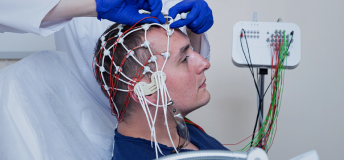
Our neurofeedback technology determines the brain’s electrical functioning patterns with the help of electrodes placed on the scalp in very precisely determined points. It analyzes characteristics such as synchrony, connectivity, frequency, amplitude, and brainwave coherence, extracting cues for the strategy of subsequent neural training sessions.
Even the simple report generated from brain mapping provides extremely valuable information that can explain why a person exhibits certain behaviors in daily life.
We then identify the most effective neural training paths and technologies, considering the dynamic functioning of the entire brain, not just problem areas. During the training sessions, the brain learns to produce healthy waves that are integrated across the entire cortical and subcortical sphere.
In these sessions, the computer “listens” to brain activity through the electrodes placed on the client’s head and, based on the learning strategy configured by Neuralyst specialists, provides feedback to the brain both visually (the client watches a special screen with extremely fast response times) and audibly (the client also wears a pair of headphones). This guides brain activity toward producing a healthy, complex wave.
During a single session, we help the brain learn multiple healthy, complex waves, designed synergistically and coherently for each meeting.

Mental performance
Mental performance means the speed and efficiency with which a person can process information, solve problems, make correct and wise decisions, and accomplish cognitive tasks.
Of course, performance is influenced by factors such as the environment in which we live, daily habits over recent years, rest levels, stress, and life experiences.
Achieving mental performance is an initiatory journey, with intermediate steps of satisfaction as various brain functions harmonize step by step.
One of the critical factors today that massively influences individual and group performance is daily habits. For optimal functioning, the brain needs a variety of activities, sometimes opposing ones, that necessarily support each other: maintaining focused attention on a subject, for example, requires small periods of “staring at the ceiling” or defocusing to complete a full brain cycle. Thus, during moments of active attention, certain neural areas, usually cortical (located on the brain’s surface in well-defined areas), operate ideally at specific optimal frequencies, while moments of “staring into space” activate an entirely different set of brain areas, usually subcortical (located deeper within the brain), corresponding to entirely different specific functioning frequencies. This second set of subcortical areas actively supports (when synchronized and coherent) the first set of areas (the active ones), producing long-term performance.
What happens when, in daily habits, we fail to activate these two sets of areas alternately ? The internal synchronization deteriorates, connectivity and operational efficiency decrease by up to 40%, the person becomes tired, inattentive, unable to make quick and healthy decisions, gradually depleting brain reserves, and in everyday life, the quality of personal life and work drops to unacceptably low levels.
In the first interview, before initiating a Neuralyst approach, we review the client’s current situation using a questionnaire, giving us an initial idea of how the brain currently functions.
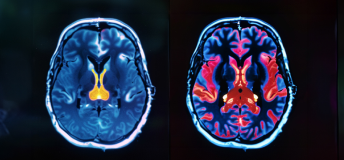
Then, with the help of a full-brain qEEG scan, performed according to our protocols, we evaluate the frequency, synchrony, connectivity, and coherence of all brain areas, both static (with eyes closed and open) and dynamic (during the scan, the client performs a selection of small tasks to highlight the communication between the scanned brain areas).
The result is a complex report, which we then discuss with the client in a revealing one-hour session.
Based on the resulted report, we then calculate the intervention strategy for neural training sessions, personalized according to the client’s desired objectives. In each session, the brain learns new synaptic pathways and performance activation patterns that allow a healthy and optimized flow of neural activity in terms of activation level, synchronization, coherence, and connectivity.
Mental performance rests on several key aspects, which we will also analyze from a “technical” perspective:
- Cognitive capacity: memory, attention, processing speed, and the brain’s executive functions (planning, organization, and impulse control) – here, we have several technologies that support the involved cortical frontal and prefrontal areas.
- Mental flexibility: the ability to quickly and efficiently switch from one thought or task to another, to adapt to new information and circumstances. We focus on inter-hemispheric brain synchronization and the correction of electrical reversals.
- Critical thinking: the ability to objectively analyze, evaluate, and interpret information to make rational and well-informed decisions. Here, we optimize high-frequency and amplitude activity in specific areas and slower activity in others for rapid neural recharging.
- Problem-solving: the ability to find creative and effective solutions, whether practical or theoretical. We support the brain’s flexibility to coherently switch from high waves to the slow waves specific to lateral, creative thinking.
- Mental resilience: the ability to stay focused and attentive even in stressful situations or when facing difficulties. We support the synchronization of subcortical areas that allow energy recharging throughout the day, as well as the optimization of patterns that promote quality sleep.
- Learning performance: the efficiency with which a person can assimilate new information and skills and then apply them effectively. We train the client techniques to transfer short-term memory to long-term memory, activating the competent areas.
- Mental clarity: the ability to maintain a clear and focused thought without distractions or mental confusion. The client gradually experiences increased mental clarity with each Neuralyst training session.
The benefits of neurofeedback for anxiety and performance
Neurofeedback is a form of biofeedback that helps individuals regulate brain activity through real-time monitoring and feedback. This technique has been gaining attention for its potential benefits in managing anxiety and enhancing mental performance. Here’s how neurofeedback can be beneficial:
1. Reduction in Anxiety Symptoms
• Regulation of Brain Activity: Neurofeedback trains the brain to shift from anxious, hyperactive patterns to more balanced, calm states. By reinforcing more stable brainwave patterns, individuals can reduce symptoms of anxiety, such as excessive worrying, restlessness, and tension.
• Non-Invasive Treatment: Unlike medication, neurofeedback is a non-invasive approach to anxiety management. It allows for self-regulation without the side effects associated with pharmaceuticals.
• Long-Term Effects: Studies suggest that neurofeedback can provide lasting relief from anxiety symptoms, as the brain learns to sustain healthier patterns even after the training sessions end.
2. Improvement in Mental Performance
• Enhanced Focus and Attention: Neurofeedback can optimize brainwave patterns associated with focus, leading to improvements in attention span, concentration, and productivity. This is particularly beneficial for those with ADHD or similar conditions.
• Cognitive Flexibility: By training the brain to switch between different mental states more efficiently, neurofeedback enhances cognitive flexibility, which is the ability to adapt to new information and tasks quickly.
• Stress Resilience: Improved brain regulation through neurofeedback enhances resilience to stress, allowing individuals to perform better under pressure. This is crucial for maintaining high performance in demanding environments.
3. Emotional Regulation
• Better Mood Control: By balancing brainwave activity, neurofeedback helps in stabilizing mood swings and improving emotional regulation. This can lead to better emotional intelligence and interpersonal relationships.
• Reduced Overwhelm: Neurofeedback can help individuals manage overwhelm by improving their ability to process information calmly, which can be particularly useful for those facing high cognitive loads or decision-making responsibilities.
4. Sleep Improvement
• Better Sleep Patterns: Anxiety often disrupts sleep, and neurofeedback can help regulate the brainwaves associated with restful sleep, leading to better sleep quality. Improved sleep, in turn, boosts cognitive function and mental clarity.
5. Personalized Approach
• Tailored to Individual Needs: Neurofeedback is a personalized intervention, adjusting to each person’s unique brain activity. This customization can make it more effective than one-size-fits-all approaches to anxiety and performance enhancement.
Overall, neurofeedback offers a promising, non-invasive method to manage anxiety and improve mental performance, with benefits ranging from enhanced focus to emotional regulation and better sleep.
Neurofeedback Guide: What It Is and How It Works
How neurofeedback improves mental performance
The benefits of neurofeedback for anxiety and performance
test
